Whenever I’m displaying my work at a show, I’m met with a flood of questions—most of them thoughtful, a few of them less so. As someone who naturally prefers the quiet of the workshop, these events leave me both worn out and strangely energized. At the end of the day I reflect on some of the questions asked.
One question I hear often is:
“Have you ever worked with the wood species __?”
If the species in question is rare or obscure, my answer is usually, “No, I haven’t,” followed by a smile. There are an estimated 60,000 wood species on the planet—and not even scientists fully agreeing on the exact number—no craftsman could ever become intimately familiar with more than a fraction of them.
Most people ask out of genuine curiosity; others are subtly signaling their woodworking knowledge by referencing some exotic species from a far-off jungle. Either way, I’m always happy to discuss wood.
While I’m open to working with nearly any wood a client might request, there are important practical and artistic reasons why I’ve narrowed my preferred materials to six core species. These woods consistently offer the qualities necessary for heirloom-grade functional art—strength, beauty, stability, and the ability to produce wide, high-quality slabs.
My selection process revolves around four essential criteria:
- Hardness
- Tree size and slab availability
- Aesthetic beauty
- Structural integrity
Hardness: Built for Everyday Living
Because I specialize in tables and functional furniture, literal hardness—not just whether a species is botanically a “hardwood”—is essential. The Janka hardness scale measures how resistant a wood is to denting and wear.
For perspective:
- Soft woods (450–550): Redwood, Basswood, Poplar
- Mid-range woods (600–950): Cherry, Western Maple, Douglas Fir
- Ideal hardwoods for fine furniture:
- Walnut — 1010
- White Oak — 1200
- Hard Maple — 1450
- Pecan/Hickory — 1800
- Mesquite — 2200
The scale reaches as high as 5060 with Australian Buloke at the top of the list.
I prefer woods in the 1000–2200 range, which provide excellent durability while resisting dents, scratches, and daily wear. Softer species—like Red Wood—can dent from something as simple as pressing a pencil against paper. Once you cross 1000 on the Janka scale, that becomes much less of a concern.
Of course no table is a match for a determined toddler armed with a fork (article on different finish options coming soon).
Tree & Slab Size
Most of the tables I build are 30 inches wide or more, and I prefer working with single live-edge slabs. That means the tree itself must be at least 30 inches in diameter to begin with. To find a tree of that proportion means finding a pretty old tree.
For example:
- A Walnut tree needs 80–150 years to reach that width.
- A 100-year-old Shagbark Hickory might only reach 12–24 inches in diameter.
- A 100-year-old Pecan (also a Hickory) commonly reaches 24–36 inches.
Because slab sourcing is not like ordering dimensional lumber from a store, using species that consistently grow wide enough to produce high-quality slabs are essential. Selecting species that consistently grow large enough to produce wide, stable slabs make it far more feasible to find pieces with the right width, shape, and natural character for each client’s project.
Beauty: Where Craftsmanship Meets Nature’s Art
Beauty is the most subjective aspect of wood selection—and one of the most important. The six species I use regularly are, in my view, some of the most consistently stunning woods available. I am extremely critical when evaluating wood for its visual potential.
Three characteristics define beauty in wood:
- Figure — the natural patterns made by the grain (straight, wavy, curly, or wildly swirled)
- Curl/Fiddleback — tight ripples that give the surface a three-dimensional, wavy effect
- Color — whether uniform or strongly contrasting, from deep browns to striking reds and warm blondes
These elements interact differently depending on the species, health, shape, and age of the tree. The result is a wood that can feel quiet and elegant—or bold and dramatic.
Structural Integrity
A wood must also be stable and structurally sound. Once wood is properly dried (article on drying wood coming soon), it’s ready for use. But wood is hygroscopic, meaning it continually absorbs and releases moisture based on its environment.
Seasonal changes—humid summers and dry winters—cause wood to expand, contract, and “move” over time. That can lead to issues like:
- warping
- cupping
- cracking
Some species are more resistant to these fluctuations than others. The woods I choose are known for their structural stability and resistance to seasonal movement. This ensures that each piece I build not only looks beautiful but performs beautifully for decades.
The Six Woods I Rely On
After years of building hundreds of pieces and studying the nuances of different species, the woods I trust most—and offer to my clients—are:
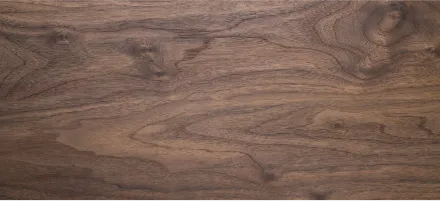
Walnut
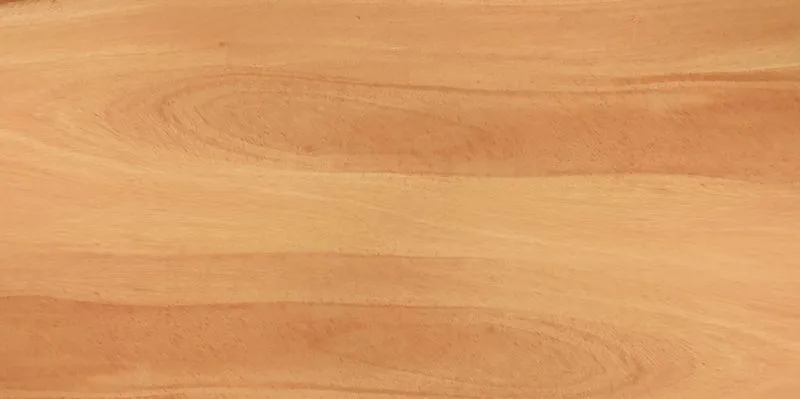
Pecan
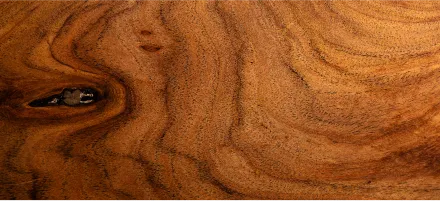
Mesquite
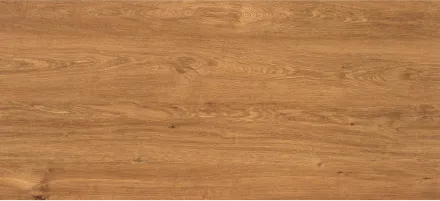
White Oak

Hard Maple
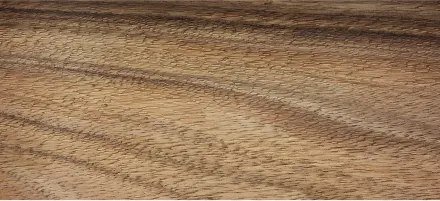
Acacia (Monkey Pod)
Together, these species provide a spectrum of color and personality, from rich chocolate browns to deep reds to warm blondes. They represent the ideal balance of hardness, beauty, stability, and slab availability—qualities essential to crafting long-lasting functional art.